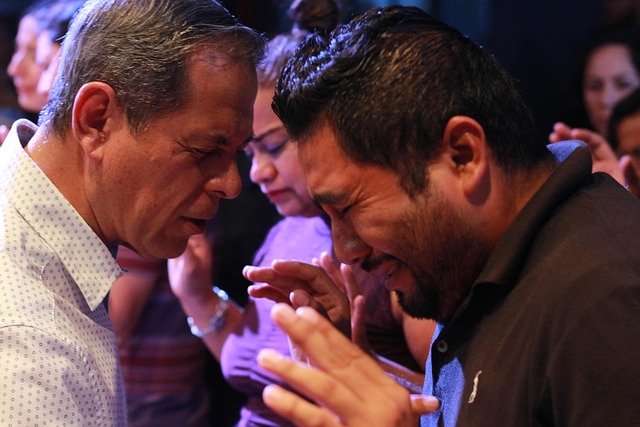
Charles Spurgeon that great British preacher of the nineteenth century stated, “The only homage which wickedness can pay to righteousness is to persecute it.” Jesus, in describing the believer’s life in the Sermon on the Mount, concludes that one of the characteristics of genuine faith is a life lived that so pleases God that persecution from others is the result. As a matter of fact, this is one of the tests of a genuine believer’s life.
Blessed are those who are persecuted because of righteousness, for theirs is the kingdom of heaven.
Blessed are you when people insult you, persecute you and falsely say all kinds of evil against you because of me.[i]
When we speak of persecution we must make some clarifying remarks. Many people suffer for the wrong reasons and complain that someone is persecuting them. Jesus in the Sermon on the Mount specified that real persecution comes for the right reason, because we are serving Jesus, and doing what is right in His eyes.
A number of years ago, while teaching in Central India at the seminary, I had the deep impression that the students before me would experience much suffering and even be martyred. It was a solemn moment for me as I considered these young people who were not only training for ministry, but knowingly were about to enter into a very hostile environment where they knew that their lives might be taken from them. When I returned the following year, one young man who was about to graduate had gone out and preached the gospel, was violently attacked, killed and his body was thrown into an open water well. Nothing was done to the perpetrators. Such is the life of many believers around the globe today.
Why has there always been hostility toward those who are followers of Jesus? Why are believers persecuted in our society? Despite persecution, the church has continued to flourish and grow. Let’s look at what Jesus had to say regarding personal hostility and animosity that we should expect to experience in this life. After talking about the importance of abiding in our relationship to Jesus in order to be fruitful, Jesus explains the nature of pruning or discipline that comes into our lives to facilitate greater spiritual growth, maturity, and effectiveness in our lives. Jesus now turns to the challenges of an effective life which will include spiritual opposition and resistance. These are normative to the genuine Christian experience. Jesus now explains the nature of rejection that occurs in the life of the believer. Here we see three elements regarding the nature of persecution or hostility against us because of our faith in Christ.
THE FIRST ELEMENT REGARDING A RELATIONSHIP WITH SOCIETY IS A WARNING OF HOSTILITY DIRECTED AT FOLLOWERS OF JESUS
While the authentic Christian life is one marked by love shown among the believers, the exact opposite response can be expected from those who are in rebellion against God. Jesus now explains why the world hates believers.
If the world hates you, keep in mind that it hated me first.
If you belonged to the world, it would love you as its own. As it is, you do not belong to the world, but I have chosen you out of the world. That is why the world hates you.[ii]
Gerald Borchert explains the reality of the early church’s experience.
If Christians think that the message of love in Christ will generally be well received by the world, they are in for a big surprise, just as the disciples had to learn. Love is not the usual pattern in social orders where power and domination are rampant and where the Good News runs counter to cultural commitments. …As this section opens, therefore, it begins with a condition that is assumed to be true (‘if the world hates you’). The situation was, for the recipients of this Gospel, not some distant possibility. The Christian community had already been excluded from the synagogues and had suffered martyrdom throughout the Roman Empire. For them to read these words struck a painful chord of realism. They were in the midst of suffering. But they were also reminded that their resurrected Lord had also walked the way of being hated.[iii]
The world or society apart from God hates both God and those who follow Him and His ways. We love those who love what we love, and we are in a state of enmity or hostility with those who hate what we love. One of the things we need to assess in life is what are the things we love, or who are those we identify with and embrace? When we reject what God loves and love what God hates, we find ourselves in opposition to God, Himself.
You adulterous people, don’t you know that friendship with the world means enmity against God? Therefore, anyone who chooses to be a friend of the world becomes an enemy of God.[iv]
What does James mean by this? When we embrace what the world values and despise what God values, we are revealing what is in our hearts. Paul states it this way to the believers in Rome:
Therefore, I urge you, brothers and sisters, in view of God’s mercy, to offer your bodies as living sacrifice, holy and pleasing to God–this is your true and proper worship.
Do not conform to the pattern of this world, but be transformed by the renewing of your mind. Then you will be able to test and approve what God’s will is–his good, pleasing and perfect will.[v]
Jesus reminds them of what He had already told them (13:16) that if a slave cannot expect to render less service than his master, neither can they, as the apostle of Him who had to face the world’s impassioned hatred in its most virulent form, expect to be immune from that hatred themselves. It is true that by their natural birth they belong to the world; by nature they are part of the sin-stained race of men and women who, for the most part, have forgotten their creaturely estate, and are arrogant and selfish, organizing their lives without thought of God. There was indeed a time when they would not have been the objects of the world’s hatred at all. But Jesus separated them from the world (19). He has incorporated them into His body; and as members of that body they must expect to be the objects of the hatred that the world in its ignorance of His divine origin is always directing against Himself.[vi]
Remember what I told you: ‘A servant is not greater than his master.’ If they persecuted me, they will persecute you also. If they obeyed my teaching, they will obey yours also.[vii]
F. F. Bruce relates how intimately the followers of Jesus are with their master both in their teaching, lifestyle, and challenges such as persecution.
The close association between his persecution and theirs finds expression in the voice from heaven which Saul of Tarsus heard on the Damascus road: ‘why do you persecute me?’ (Acts 9:4; 22:7; 26:14). The Lord who was personally persecuted on earth continued to be persecuted, even in his exaltation, in the person of his persecuted followers. Their being persecuted for his sake was a sign that they belonged to him, as it was a token of the coming judgment of their persecutors (cf. Phil. 1:28; 2 Thess. 1:5-10).[viii]
THE SECOND ELEMENT REGARDING OUR RELATIONSHIP WITH SOCIETY IS THAT PERSECUTION IS ONE OF THE IDENTITY MARKERS OF A GENUINE FOLLOWER OF CHRIST
Earlier in this gospel, Jesus had told His disciples that one of the signs of authentic faith is love.
A new command I give you: Love one another. As I have loved you, so you must love one another.
By this everyone will know that you are my disciples, if you love one another.[ix]
We know that the Jewish people had identity markers, or separation markers from the other nations. They were circumcised, had dietary laws and other observances that marked them as being different. It was that difference that caused a line of separation between Jew and Gentile. Even so, as believers we have identity markers, such as love for one another, but also, we gather together and worship God, not forsaking the assembling of ourselves. Here now Jesus introduces another identity marker: persecution for being His followers. We soon discover that those who hate Jesus will hate us, His followers.
One of the reasons that true believers are hated by the ‘society in rebellion against God’ is that a life of obedience to God exposes their lives as sinful, unhealthy, and broken. Jesus begins by pointing out that the world hated Him first and that is why they crucified Him. Too often we take rejection and attacks against us as believers personally, rather than understanding that what is hated about us is that we are aligned with Jesus.
‘If the world hates you, keep in mind that it hated me first.
If you belonged to the world, it would love you as its own. As it is, you do not belong to the world, but I have chosen you out of the world. That is why the world hates you.[x]
F. F. Bruce explains the behavior of the world toward believers in this manner.
It is an odd fact that the world soon justified its hostility to them by imputing to them the initiative in hatred. The earliest extant reference to Christians in pagan literature charges them with hatred of the human race.[xi]
The society in which Christians live have always accused believers of hatred toward them. We often hear today how the mainstream society speaks of the intolerance and exclusivity of Christians, but the reality is the very opposite. Christianity is inclusive, very loving and forgiving. However, like God, the Father, this inclusiveness invites all to come just as they are to God, but it must be on God’s terms, not our own. We must come to understand that we have violated God’s laws designed to protect us from the effects of rebellion in our lives.
The foundational theological differences between the community of Jesus’ followers and the world not only open a window on the motives and reactions of those who can tolerate neither Jesus nor his followers, but they also generate sociological differences which are bound to multiply enmity. …From an evangelistic perspective, these verses demand decision, because the issues are of ultimate importance. Following Jesus costs something (cf. Lk. 9:57-62; 14:25-33), and may cost life itself. Yet not following Jesus means one is siding with a lost and hateful world. To warn prospective disciples of these unyielding realities serves to discourage spurious conversions and to foster true ones, just as Jesus told these things to the first disciples in order to ensure stability until the time of faith truly dawned (16:1).[xii]
All this I have told you so that you will not fall away.[xiii]
THE FINAL ELEMENT REGARDING OUR RELATIONSHIP WITH SOCIETY IS THAT PERSECUTION IS INEVITABLE AND CREATES POSITIVE OUTCOMES IN THE LIVES OF OTHERS
Though we may suffer for the sake of Christ, others will see the genuineness of our faith and be deeply influenced. There is an old adage that “the blood of martyrs is the seed bed of faith.” In other words, when people see the authentic and powerful witness of a life prepared to be given for the reality of the gospel, others become convinced of its authenticity.
Remember what I told you: ‘A servant is not greater than his master.’ If they persecuted me, they will persecute you also. If they obeyed my teaching, they will obey yours also.[xiv]
A. Not only will we experience persecution but will have a positive influence in the lives of others.
Here Jesus tells us as His followers that those who obey the sayings of Jesus will be heard by others as we communicate to them both in through our words and through our lifestyle. When we are speaking God’s Word to others, God is speaking through us to them. We are His body, His mouth to a world that is disconnected to Him. We are the ones who make Christ real to those around us.
B. Jesus explains why people who often respond negatively towards us and persecute us are without excuse.
They will treat you this way because of my name, for they do not know the one who sent me. If I had not come and spoken to them, they would not be guilty of sin; but now they have no excuse for their sin.[xv]
The word rendered excuse (paraphasis) is perhaps a little stronger than excuse: They have no pretense, no pretext for their sin. Whatever pretense (and it is only pretense) the world might have conjured up to justify its evil before the coming of Christ, it has entirely lost now that this sublime revelation from God himself has come. This revelation simultaneously exposes sin and provides a remedy; the world that rejects it hates the exposure (3:19-21) and thus denies any need for a remedy.[xvi]
One of the reasons why people reject the truth is that they do not want to change. The reason why sin is embraced and prevalent is that people are ignorant of God and His ways. However, Jesus tells us that people are without excuse, not only the Jewish people who heard him in his hour but also those who are hearing our message in our hour and rejecting it.
The message that we speak are words of spirit and life. There is something about the truth that resonates within the human heart. We either accept it and respond to it, or else we reject it and fight and depreciate the message because we refuse to obey it.
C. The ramifications of rejecting the message.
Whoever hates me hates my Father as well.
If I had not done among them the works no one else did, they would not be guilty of sin. As it is, they have seen, and yet they have hated both me and my Father.[xvii]
To reject the message of grace and truth is to reject God’s message. People who think that rejecting Jesus is not rejecting God are mistaken. God has revealed Himself in the person of Jesus. Paul explains this so clearly to the Colossians.
The Son is the image of the invisible God, the firstborn over all creation.
For in him [Christ] all things were created: things in heaven and on earth, visible and invisible, whether thrones or powers or rulers or authorities; all things have been created through him and for him.
He is before all things, and in him all things hold together.
And he is the head of the body, the church; he is the beginning and the firstborn from among the dead, so that in everything he might have the supremacy.
For God was pleased to have all his fullness dwell in him.[xviii]
Jesus is the one who narrates God on the plane of human existence. Thus to hate Jesus is to hate God, just as to accept Jesus is to accept his Father (13:20). So tightly is Jesus bound up with his Father, both his person (1:1, 18; 8:58; 20:28) and in his words and deeds (5:19-30), that every attitude directed toward him is no less directed toward God.[xix]
D. There is no legitimate reason for rejecting the Son.
But this is to fulfill what is written in their Law: ‘They hated me without reason.’[xx]
John is quoting from one of the Psalms, either Ps. 35:19 or 69:4.
Jesus is stating from the Law that even His rejection and therefore our rejection by the world were prophesied earlier in the Scriptures. This rejection does not negate God’s redemptive purposes or plans. God will carry out His will regardless of human rebellion.
So, what should our response be toward persecution? Should we shy away from identifying with Jesus, or being ashamed of the gospel of Jesus Christ? No, Jesus makes it clear what our attitude ought to be.
Rejoice and be glad, because great is your reward in heaven, for in the same way they persecuted the prophets who were before you.[xxi]
The word be glad literally means “to leap exceedingly”, we would say, “jump for joy.” Not what we would call a natural response, but rather a supernatural one. When Peter and John were beaten for sharing their faith, they returned to their company and rejoiced.
The apostles left the Sanhedrin, rejoicing because they had been counted worthy of suffering disgrace for the Name.[xxii]
The puritan preacher, Thomas Watson explains:
Or as it is more emphatic in the original, ‘They rejoiced that they were so far graced as to be disgraced for the name of Christ.’ Tertullian says of the primitive Christians, that they took more comfort in their sufferings than in their deliverance.[xxiii]
Paul and Silas, beaten and cast into a jail cell at Philippi were singing God’s praise, when God delivered them through an earthquake.
After they had been severely flogged, they were thrown into prison, and the jailer was commanded to guard them carefully.
When he received these orders, he put them in the inner cell and fastened their feet in the stocks.
About midnight Paul and Silas were praying and singing hymns to God, and the other prisoners were listening to them.[xxiv]
I wonder if people would be listening to our message if they saw a transformed and joyous attitude where we were willing to pay the price to serve Jesus.
https://cdn.pixabay.com/photo/2018/11/28/16/32/esteem-3844054_640.jpg
[i] Matthew 5:10B11, The New International Version of the Bible, Zondervan, 2011.
[ii] John 15:18-19.
[iii] Gerald Borchert, John 12B21 Vol. 25B, (Nashville, TN: Broadman & Holman Publishers, 1996), 152-54.
[iv] James 4:4.
[v] Romans 12:1-2.
[vi] R. V. G. Tasker, John, TNTC, (Grand Rapids, Mi: William Eerdmans Publishing Co., 1960), 177-78.
[vii] John 15:20.
[viii] F. F. Bruce, The Gospel of John, (Grand Rapids, Mi: William B. Eerdmans Publishing Company, 1983), 313.
[ix] John 13:34-35.
[x] John 15:18-19.
[xi] F. F. Bruce, The Gospel of John, (Grand Rapids, Mi: William B. Eerdmans Publishing Company, 1983), 313; quoting from Tacitus, Annuals,15.44.5.
[xii] D. A. Carson, The Gospel According to John, The Pillar New Testament Commentary, (Grand Rapids, MI: William B. Eerdmans Publishing Company, 1991), 524.
[xiii] John 16:1.
[xiv] John 15:20.
[xv] John 15:21-22.
[xvi] D. A. Carson, The Gospel According to John, 527.
[xvii] John 15:23-24.
[xviii] Colossians 1:15-19.
[xix] D. A. Carson, The Gospel According to John, 527.
[xx] John 15:25.
[xxi] Matthew 5:12.
[xxii] Acts 5:41.
[xxiii] Thomas Watson, The Beatitudes, Carlisle, Pa: Banner of Truth Trust, 1971, first printed in 1660), 268.
[xxiv] Acts 16:23-25.